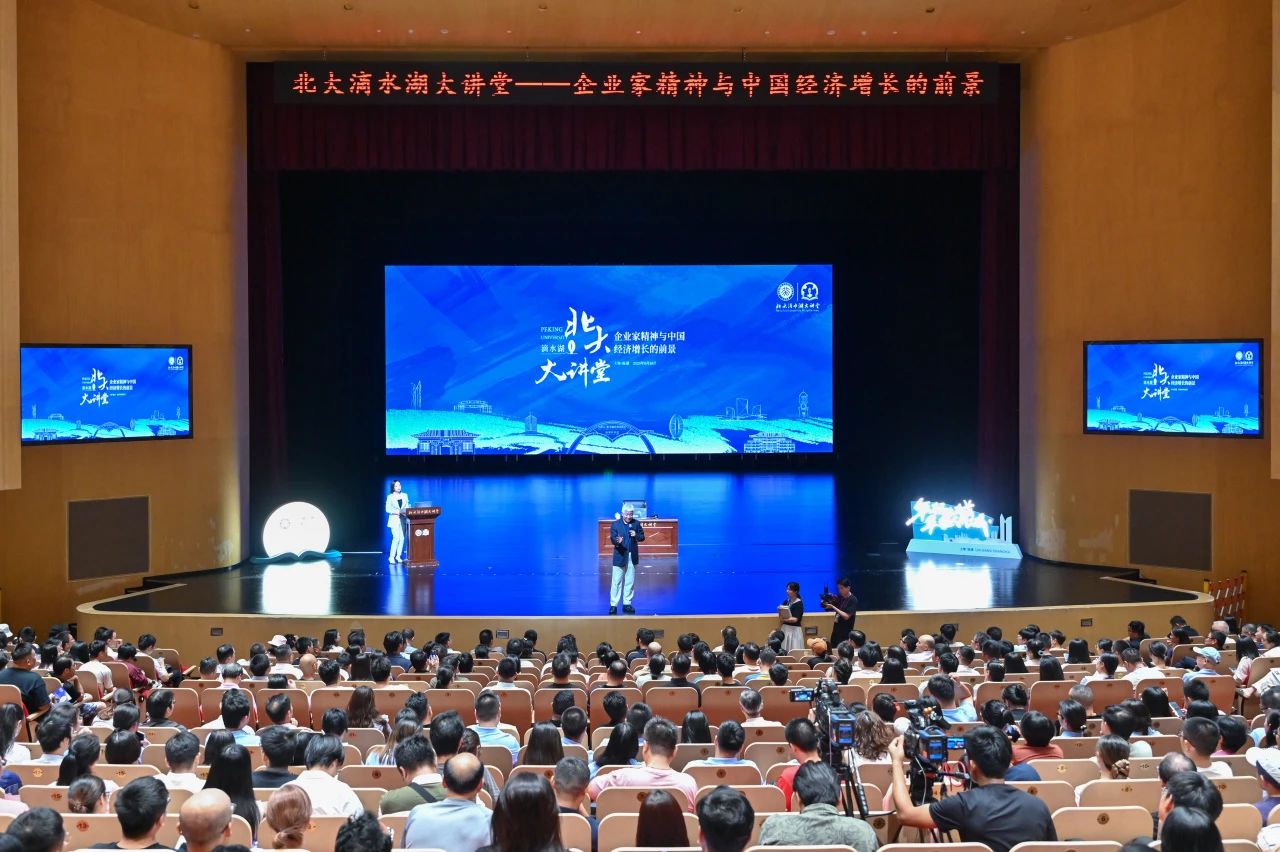
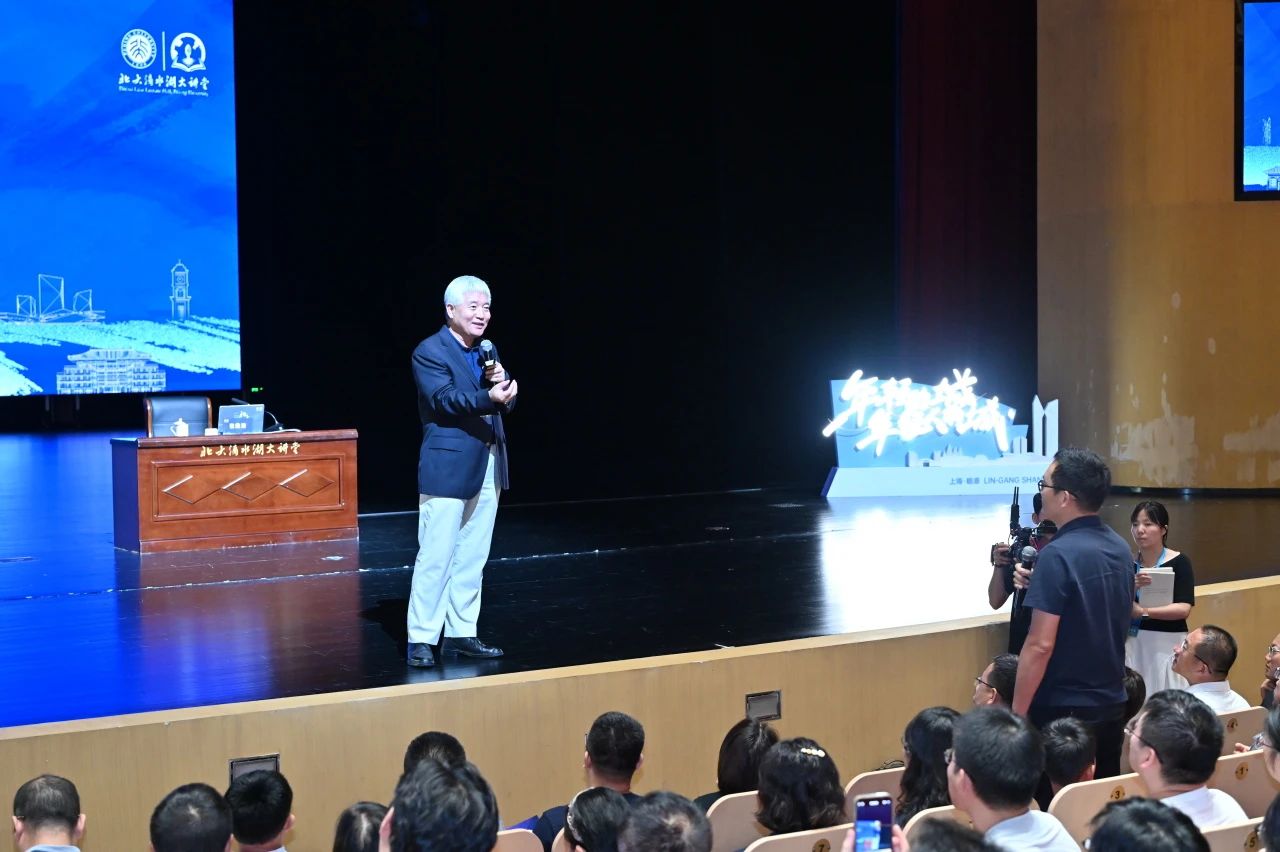
On August 26th, The 26th lecture of Peking University Dishui Lake Lecture Hall (PKU-DSLLH) was successfully held at the Lingang Performing Arts Center. Professor Zhang Weiying from the National School of Development at Peking University (NSD), was invited to deliver a special lecture titled Entrepreneurship and the Prospects of China's Economic Growth , in which he conducted an in-depth analysis of the essential driving forces behind economic growth and future challenges.
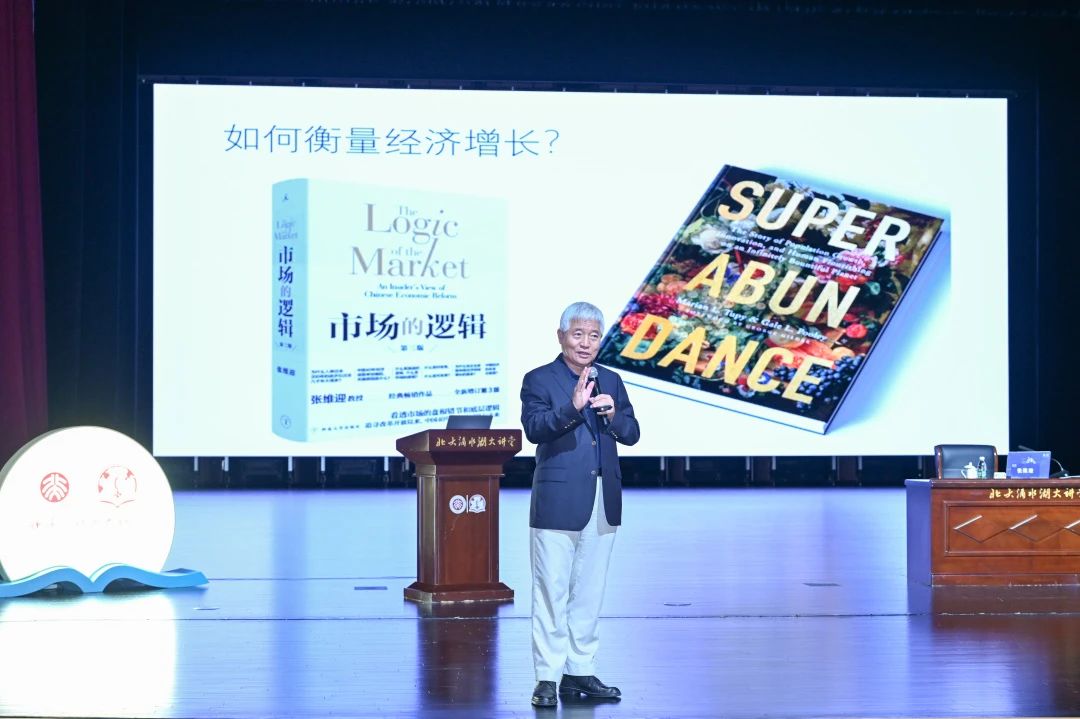
Prof. Zhang pointed out that economic growth is a new phenomenon in human history. Throughout the history of human civilization, living standards remained stagnant for a long time. Real global economic growth has only a history of about 250 years, while China's remarkable economic growth has occurred only in the past 40 years. He used vivid "time-based price" data (referring to the time that can be purchased with unit income or the labor time consumed in unit products in an economic context) to confirm this leap forward. Prof. Zhang emphasized that the essence of economic growth is the process of creating new products and new industries. The variety of products produced by humans has surged from hundreds two hundred years ago to hundreds of millions today, which confirms that innovation has fundamentally reshaped the economic structure. The core driving force behind this growth is precisely entrepreneurship. The key to entrepreneurial decision-making lies in using imagination to break through the constraints of resources, technology and demand, and create new possibilities. What entrepreneurs pursue is not only profits, but also building a business kingdom, proving their self-worth, enjoying the creative process and changing the world.
Regarding the prospects of China's economic growth, Prof. Zhang proposed a key framework: entrepreneurs drive the economy through two tracks - "arbitrage" to identify market imbalances and "innovation" to create new imbalances. He emphasized that concepts and systems are the "first-order problems" that determine China's economy. The protection of the rule of law and a market-oriented environment are crucial, while macro policies are only "second-order problems". Citing the experience of reform and opening up, he pointed out that the core of the 1978 reform was to solve first-order problems, rather than merely making adjustments to second-order policies.
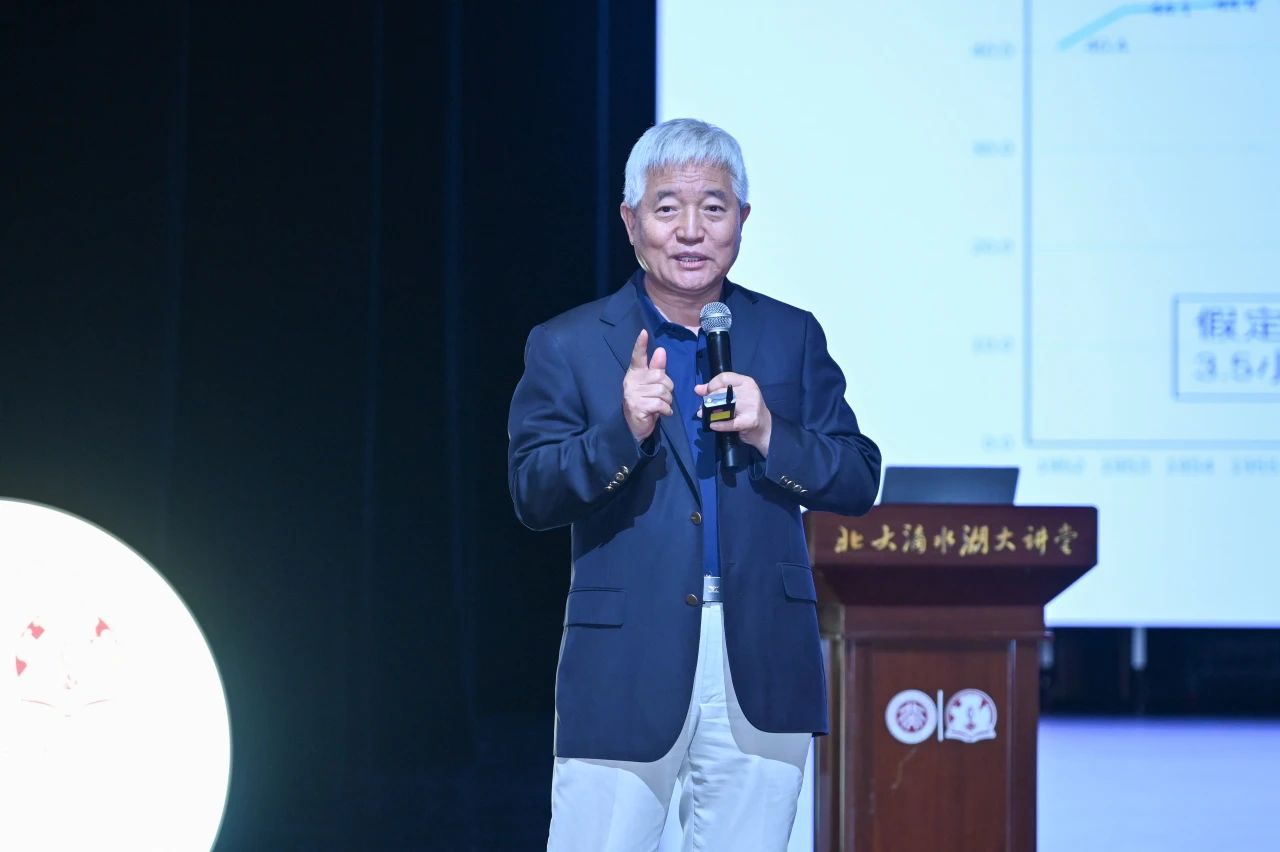
During the interactive exchange session, the audience raised questions around topics such as "the path of Chinese enterprises' overseas expansion", "the dilemma of long-term corporate investment" and "the long-term expectations for the cultivation of entrepreneurship". Prof. Zhang pointed out that enterprises should abandon unified planning and rely on entrepreneurial decisions to achieve diversified development so as to stimulate vitality. Faced with the problem of corporate funds, he frankly stated that the fund dilemma needs to be solved by enterprises themselves, and pointed out that the core of entrepreneurship is the resilience of persisting through repeated setbacks. Finally, he emphasized that "human effort is the decisive factor", and suggested that entrepreneurs obtain positive feedback from improving product details. He also urged them to firmly believe that the institutional culture can be changed, and that individual initiative is the key to breaking the deadlock.
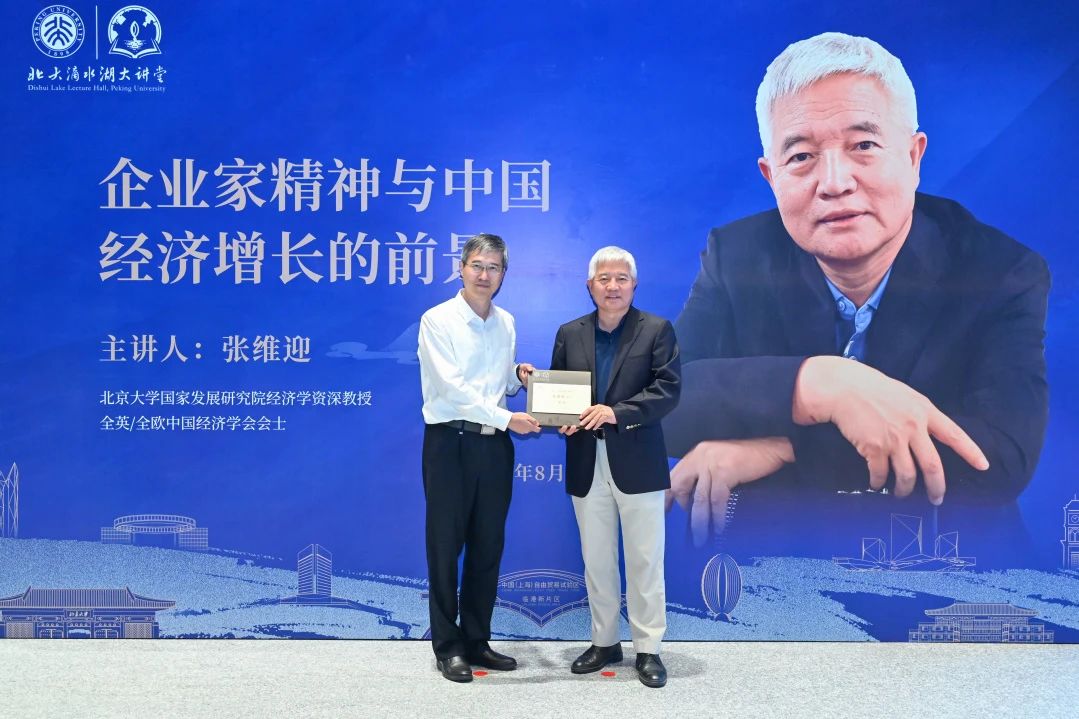
Yang Zhengwei, Executive Deputy Director of the Lin-gang Special Area Administration(LSAA), attended the event and awarded a commemorative plaque for the lecture. More than 600 citizens participated in this lecture.
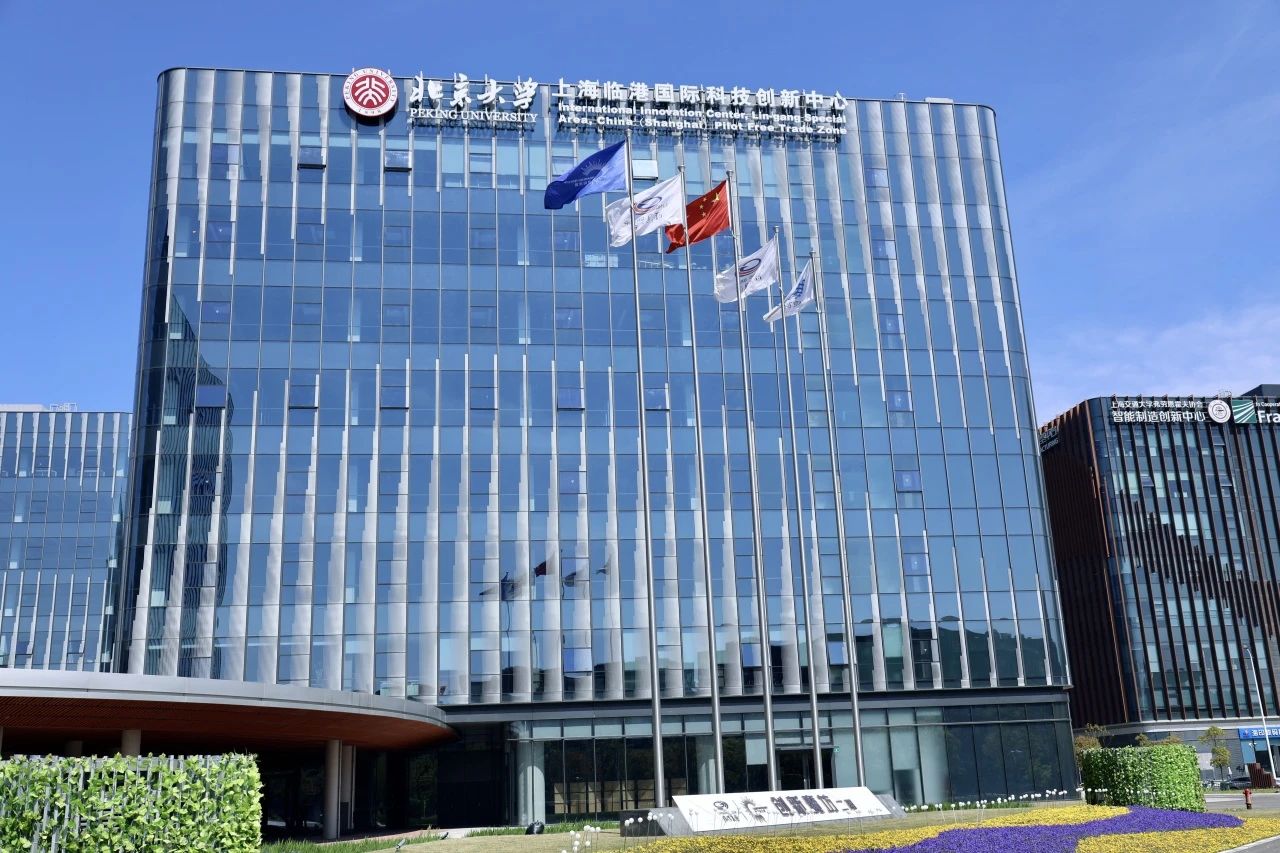
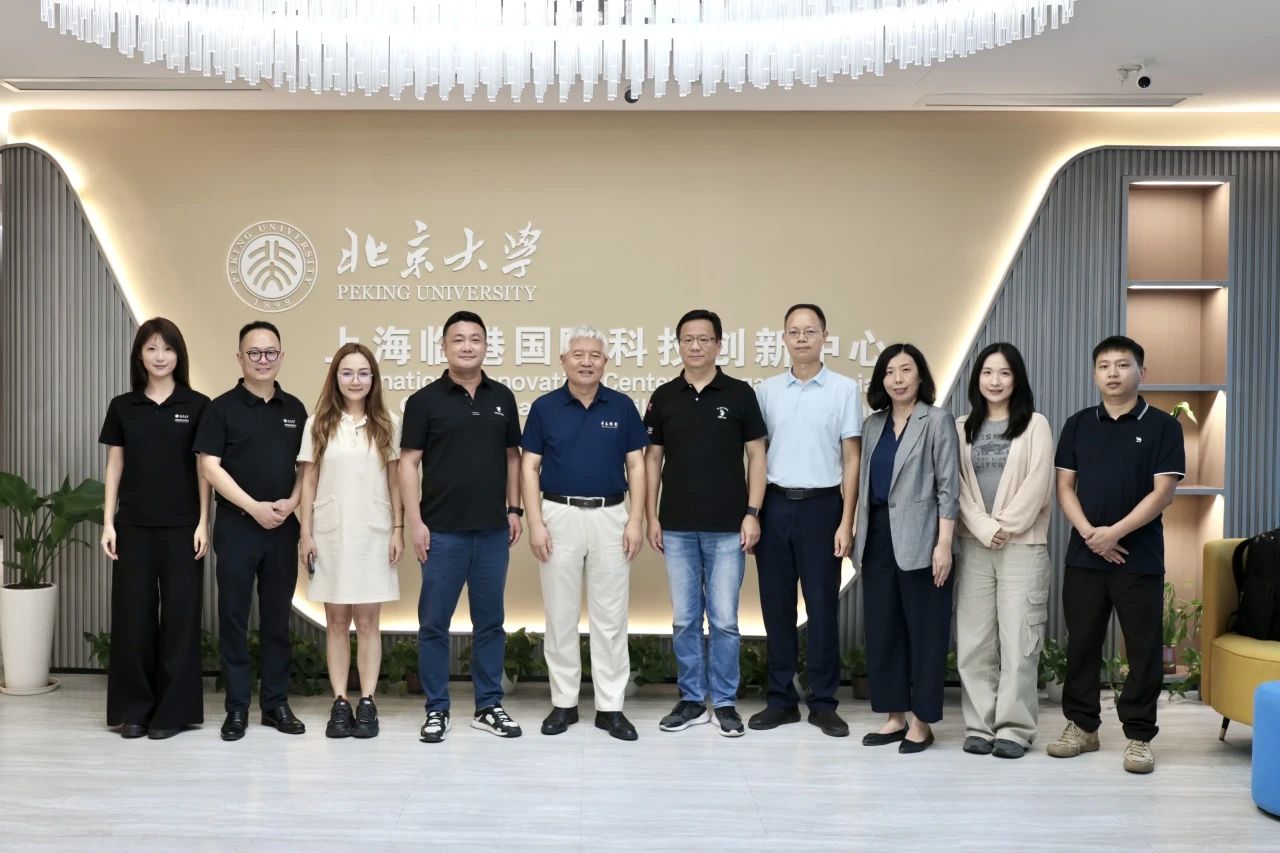
Before the event, Prof. Zhang conducted an on-site inspection of the Peking University International Sci-Tech Innovation Center at Lin-gang Special Area, China (Shanghai) Pilot Free Trade Zone (PKU-IICSH), toured the Peking University Lin-gang Party-Mass Service Center on the first floor of the PKU-IICSH, and gave cordial guidance on the development of the PKU-IICSH.
The PKU-DSLLH was initiated and supported by the LSAA of China (Shanghai) Pilot Free Trade Zone. It was co-sponsored by the PKU-IICSH, Office of Science and Technology Development and Office of Humanities Social Sciences, Peking University, with the in-depth participation of relevant units such as Peking University Press and Peking University Alumni Association. Relying on Peking University's profound academic accumulation and expert resources in the fields of humanities and social sciences, it focuses on areas such as economic development, humanistic art and social governance.
Since the establishment of thePKU-DSLLH in August 2023, it has been held once a month. A total of 25 well-known professors and experts from Peking University have come to Lingang Special Area to conduct in-depth exchanges with the builders of the Special Area , so as to better meet the diverse and high-quality spiritual and cultural needs of citizens. Over the past two years, the total number of on-site audiences has exceeded 11,000, and the number of online audiences has exceeded 1 million.
The PKU-DSLLH has become an important humanistic brand event in Lingang Special Area. It enables every striver in Lingang to release their youth passion, pursue their youth dreams and achieve all-round development under the nourishment of culture. It also outlines a richer cultural texture and injects more powerful spiritual strength into "Young City for the Youth”.